Cash for Care: A Wolf in Sheep’s Clothing
President Trump is reviving an old idea with a new disguise — a proposal to replace the Affordable Care Act’s enhanced premium tax credits with cash accounts that people can use to “shop” for coverage.
On the surface, it sounds empowering: give people cash instead of sending subsidies to insurers. But peel back the packaging, and it’s clear this is a wolf in sheep’s clothing — a policy that could dismantle the Affordable Care Act (ACA) from within, not make health care more affordable or accessible.
A False Choice Disguised as Freedom
The pitch is simple: give people “choice.” In reality, this plan could gut the ACA marketplaces, spike premiums, and erode protections for people with preexisting conditions. By turning subsidies into cash, younger and healthier people would be incentivized to buy cheaper, low-quality “junk” plans — or skip coverage entirely. That leaves sicker and older people behind in the marketplace, driving costs even higher and threatening a full-blown death spiral for the Affordable Care Act.
Choice means nothing when what’s on offer is less coverage for more money.
A Giveaway to Private Interests, Not Families
This proposal doesn’t make health care more affordable for everyone — it just shifts who bears the cost. Instead of strengthening coverage, it hands power back to private insurers.
The result? Families are likely to shoulder more risk and out-of-pocket costs while insurers and private equity firms continue to profit. Once again, the administration is prioritizing free market ideology over people’s lives.
What Real Affordability Looks Like
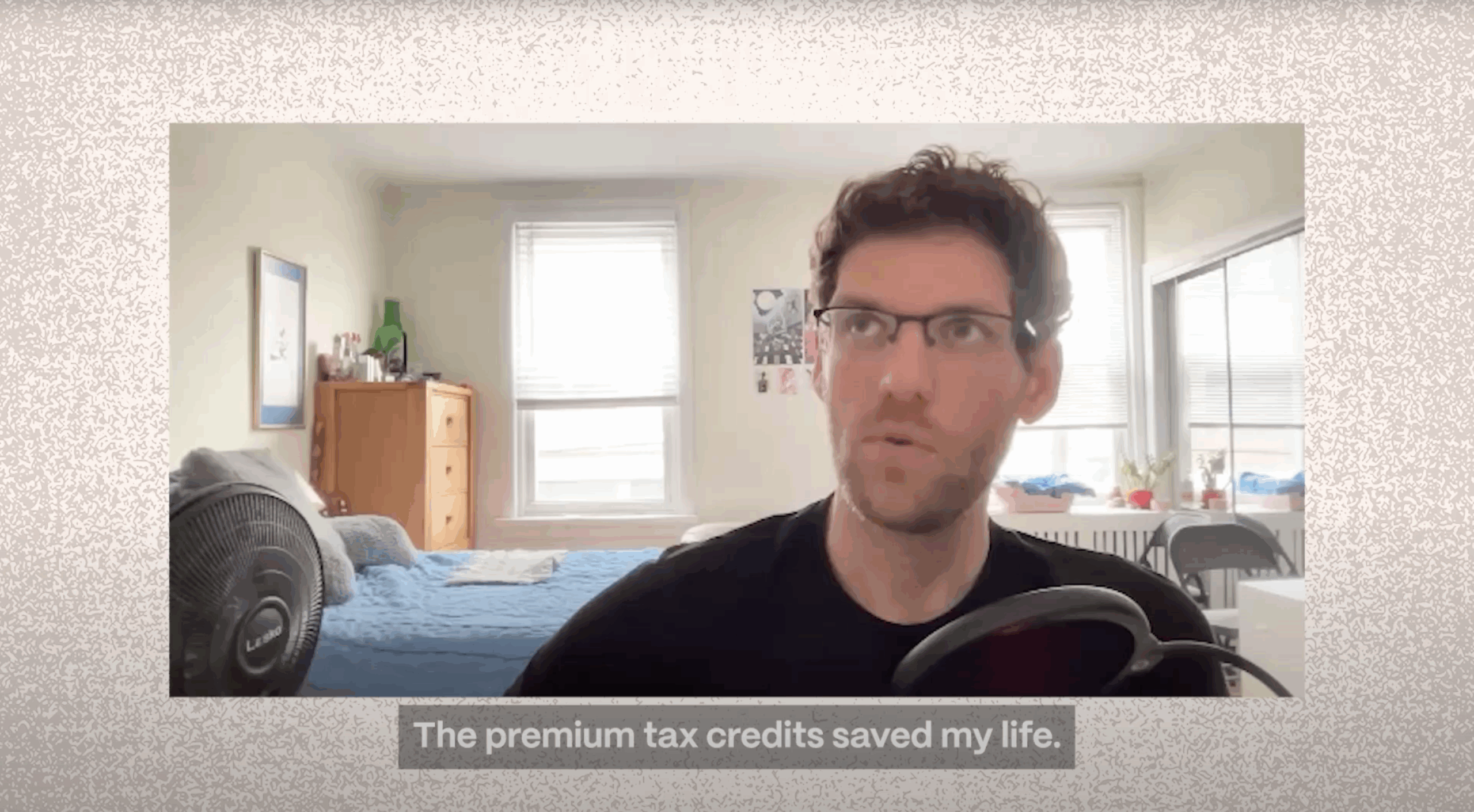
If policymakers were serious about lowering costs, they’d make the enhanced ACA premium tax credits permanent. Nearly all Marketplace enrollees (93%) benefit from enhanced premium tax credits. That means these credits have helped 22 million people afford coverage — people like Jason — keeping premiums stable and expanding access across rural, Black, Hispanic, and low-income communities.
22 million people benefit from enhanced premium tax credits that lower their health costs.
Source: Center on Budget and Policy Priorities. Sep 2025.
Enhanced premium tax credits also reverse the devastating health care cuts from H.R 1, expand Medicaid, confront hospital and insurer consolidation, and rein in predatory financial products offered in health care settings — the real drivers of unaffordable care and medical debt.
Instead, this “cash-for-care” plan tells families: “Here’s a little money. Good luck navigating one of the most complex, exploitative markets in America.”
Health Care Is Not a Consumer Product
Health care isn’t a luxury purchase — it’s a necessity. Treating it like a marketplace commodity ignores the reality that most people don’t have the information, leverage, or resources to “shop” for care. It’s not freedom when families are forced to choose between paying rent and keeping their coverage. It’s not reform when the result is more medical debt and more people left out.
A Political Maneuver, Not a Policy Solution
Let’s be honest: this plan is not about empowering people — it’s about undermining the ACA under the guise of innovation. It’s a political maneuver dressed up as reform.
Real leadership means protecting the programs that work and making them stronger in order to guarantee affordable, comprehensive care for everyone one, not likely gutting what does currently work for political points.
Because freedom isn’t a few extra dollars in a savings account — it’s knowing you can get the care you need, when you need it, without risking your financial security.
Our Work Toward Real Solutions
At Community Catalyst, we’re working with partners across the country to protect affordable coverage, expose the harm of profit-driven policies, and build a health system rooted in race equity, reproductive freedom, and economic justice. Real solutions mean strengthening the ACA, expanding Medicaid, and holding hospitals and insurers accountable — not replacing proven protections with political experiments.
When we center people over profit, we build a system where everyone can thrive — not just survive.