The New Frontier of Health Advocacy: Stories as Data
As a nation — the government, foundations, and even individuals have spent billions of dollars to address issues like health disparities and have incremental progress to show for it. For all the money spent and hard work done, we remain ensconced in a health system that refuses to change to better serve its communities.
Real change — real health justice — demands innovation in the advocacy space. That means demonstrating how power is built and exercised through years and decades, not grant cycles.
And — true to my epidemiological roots — I see an opportunity in data.
Currently, the story that is told about communities is based on data that is largely controlled by large, powerful entities like hospitals, insurers and governments, that credential a story those entities want to tell. It is hard for us as a health justice movement to talk about the issues we know — because we hear them directly from communities — when we’re up against data that disregards the value and importance of personal experience.
I want to pull the curtain back and share how Community Catalyst is challenging that narrative.
I recently got back from a meeting in D.C. that brought together partners from states around the country, many groups who we’ve built partnerships through our multi-year Voices for Health Justice project, to envision a new way of powering advocacy efforts.

We pitched a new idea to a roomful of these partners — let’s build something that doesn’t yet exist. A databank that is not informed by data collected by governments and insurers, but a databank based on how everyday people experience the health care system. After two days of deep, thoughtful, and sometimes contentious discussion, we arrived at the beginning of a shared governance structure to build what we’re calling Health Justice Intelligence.
EXPLORE THE WORK
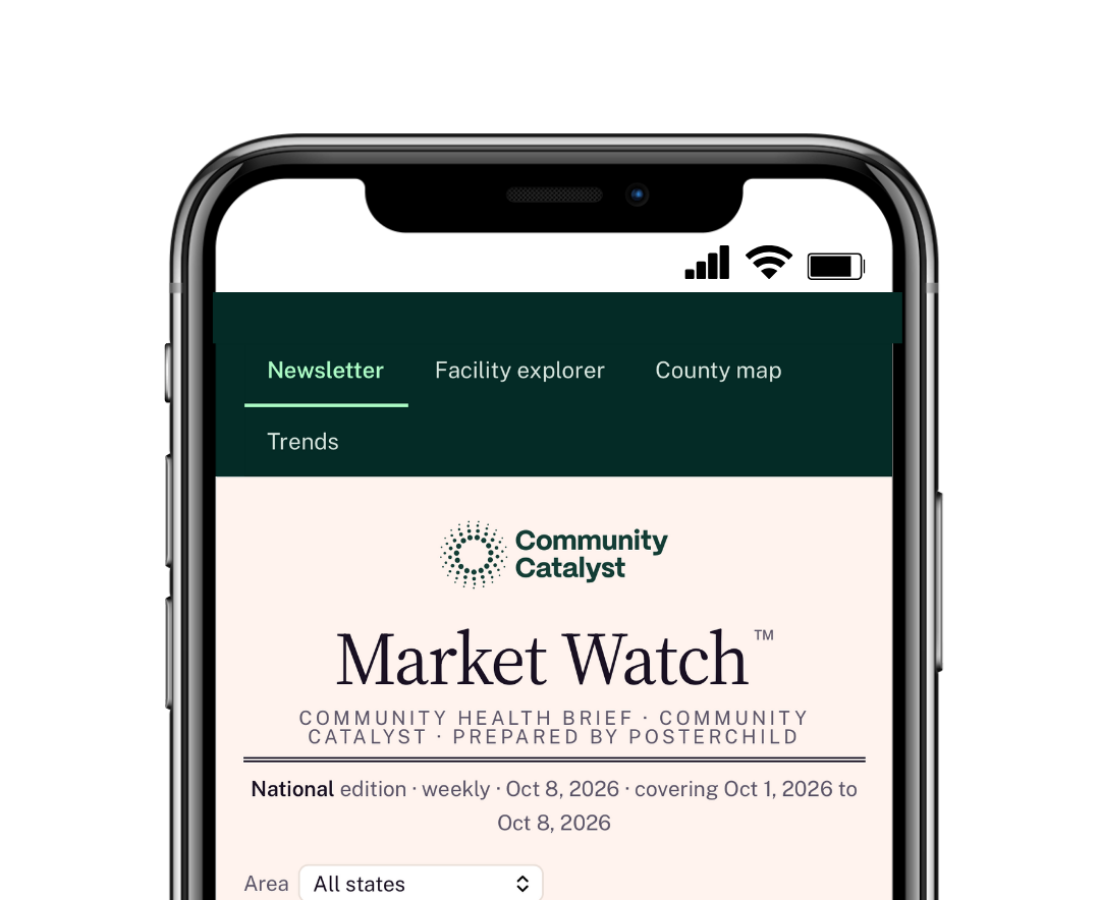
The big idea is that we (Community Catalyst and partners equally) oversee a new, substantive set of data that is informed by people’s direct experiences to affect the change we’ve been fighting for. We demonstrated our proof of concept, based on nearly 14,000 stories about the health care experience coded directly by storytellers, not researchers, to paint a picture of what care looks like in certain states and communities around the country. It paints a vivid picture of where the health of communities actually is. Not where census data says it is. And we now have a commitment from partners to scale and co-create this new project.
So, I always ask people: what will success look like?
Success will be when we can look at thousands of stories and identify a particular community reporting lack of access to care or harm from the care they are receiving and take that directly to community leaders and health systems staff to get the problem solved.
Success will be when those hundreds of thousands of coded experiences spur intervention and action from policymakers on all levels because we become undeniable.
We will be successful when we have built a hub of equally shared, collective power that allows organizations to drive and shape foundation investments.
Ambitious? Naturally. But it is what the moment demands of us. A quote commonly attributed to Eleanor Roosevelt is, “[T]he future belongs to those who believe in the beauty of their dreams.”
Dream with us.