How Medicaid and Medicare Helped Rebuild a Life: Kaitlin’s Story
Meet Kaitlin
In 2016, Kaitlin’s life changed overnight. A severe chronic condition left her in constant, debilitating pain.
“It affected many activities of daily living — cooking, cleaning, my independence,” Kaitlin shares. “It felt like stepping into a parallel universe. A walk to the mailbox was a victory. I couldn’t drive for a year.”
Before getting sick, Kaitlin was a successful nurse manager. Within a year, she lost her career, her home, and her entire life savings. She went from financial stability to living on the poverty line — simply because her health failed.
When Kaitlin first became disabled, she enrolled in Medicare but was not aware of her Medicaid eligibility. Medicare covered her doctors and specialists, but not the high cost of the medications she needed to manage her pain. Medicaid eventually filled that gap— helping cover prescriptions and additional supports that Medicare alone could not.
12 million people rely on both Medicare and Medicaid for health care
Together, Medicaid and Medicare didn’t just cover care — they worked in concert to support her recovery. With both programs in place, Kaitlin was able to access consistent treatment, afford the medications she needed, and avoid gaps that could have delayed care or worsened her condition.
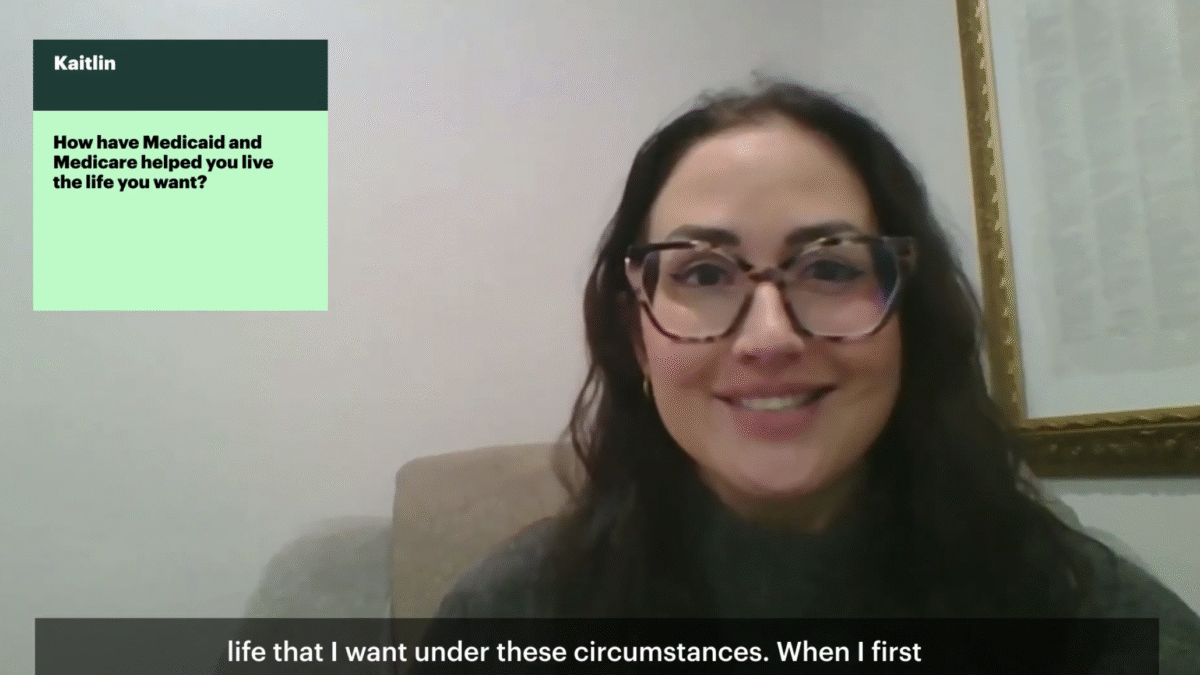
Today, Kaitlin can manage her pain. She works from home and is present in her community with her family and friends.
“[Medicaid and Medicare] helped me gain some of my life back,” she says. “So I can contribute to the economy. So I don’t have to choose between medications and food.”

It’s About More Than Just Health Coverage
Kaitlin is one of more than 12 million people who rely on both Medicaid and Medicare — often called dually eligible individuals. These are older adults and people with disabilities who live on low or fixed incomes and manage complex or chronic health conditions.
For people with high and ongoing needs, care isn’t just about doctor visits. It includes medications, long-term services and supports, help with daily activities like bathing or dressing, and frequent interaction with hospitals, specialists, and care teams.
When Medicaid and Medicare are poorly coordinated, people face disconnected systems, multiple care managers, duplicative paperwork, delayed treatments, and conflicting care plans. These breakdowns lead to worse health outcomes — and higher costs — for everyone.
But when the programs work together, people like Kaitlin can avoid those gaps. Coordinated care means fewer delays, clearer treatment plans, and stability that allows people to heal, work, and participate in their communities.
Medicaid and Medicare have truly allowed me to live the life I want under these circumstances.
Integrated Care Is a Lifeline—not a Luxury
For millions of dually eligible people, Medicaid and Medicare are much more than insurance. Together, they can be the difference between stability and crisis, between managing a condition and being overwhelmed by it, between living independently and being confined to a bed in chronic pain.
Kaitlin’s story shows what’s possible when coverage is aligned and care is coordinated while illustrating the gaps when Medicare and Medicaid are not integrated. In Kaitlin’s case this means not being helped into Medicaid enrollment as soon as she qualified for Medicare which would have offset the financial difficulties she initially faced with prescription drug costs. States and the federal government can take action to ensure that Medicaid and Medicare work together more consistently and effectively for people who are dually eligible by:
- Make Integrated Care Models Available to All: People who are dually eligible should have access to a coverage option that integrates their Medicaid and Medicare coverage while identifying eligibility and simplifying enrollment and care across both programs.
- Making Coverage Easy to Keep: Require states to align renewal rules and timelines across Medicaid eligibility pathways, streamline paperwork, and provide at least a six-month grace period when coverage is lost due to technical issues, system errors, or administrative delays. Congress should also repeal the ten-year moratorium on Medicaid and Medicare eligibility rules that would have helped simplify enrollment and renewal for people who are dually eligible.
- Giving Dually Eligible People a Seat at the Table: Create a national advisory council of dually eligible people, caregivers, and advocates to guide federal policy and ensure programs reflect lived experience.
- Investing in Ombudsman Programs: Require every state to fund an independent ombudsman with authority to resolve Medicare–Medicaid coverage and care disputes — regardless of where someone lives.
- Creating Streamlined Transition Policies: Establish policies that require states to expedite reassessments, simplify verification, and maintain coverage continuity when people move between states — preventing gaps caused by disconnected systems.
With the right policies in place, Medicaid and Medicare can function as a coordinated system — one that centers people, reduces fragmentation, and meets complex needs without forcing individuals to navigate multiple disconnected programs.
Integrated care should be the norm, not the exception — so more people can recover, rebuild, and thrive.
Call to Action
Millions of people depend on both Medicaid and Medicare for stability and peace of mind — for themselves and their loved ones. Kaitlin’s experience shows how life-changing it can be when these programs work together.
Now imagine a system where Medicaid and Medicare operate as one coordinated network — and stories like Kaitlin’s are the rule, not the exception.
If you or someone you love relies on Medicaid and Medicare, your voice matters. Share with us: How have having Medicaid and Medicare helped you live the life you want?
Record a short video sharing how changes to Medicaid and Medicare could affect your life — whether you’re a caregiver, an older adult, someone with a disability, or working to stay healthy and housed.
Your story helps policymakers understand what’s really at stake — and why better, more coordinated care can’t wait.