How Connecticut Took On Predatory Medical Credit Cards — With Community Catalyst in Its Corner
Shaping the legislative language.
Our staff provided recommendations on the bill's text.
Testifying at the bill hearing.
Staff testified directly, adding independent, research-backed weight to the case for the bill.
Rebutting industry misinformation in real time.
When industry representatives offered testimony that advocates believed was inaccurate, we drafted a memo to the co-chairs of the General Law Committee correcting the record before lawmakers voted.
Serving as an unbiased, factual resource for lawmakers.
The goal was to give legislators the kind of unbiased, factual grounding that lets them vote with confidence on a common-sense consumer protection.
Please add a description or disable this tab in the editor.
Impact at a Glance
Built on trust. Backed by expertise. How Community Catalyst drives change.
In June 2026, Connecticut became the latest state to crack down on one of the more quietly predatory corners of the health care financing world: medical credit cards. The new law, sponsored by state Rep. Gary Turco, bans providers from marketing financing products like medical credit cards to patients who are mid-treatment or under anesthesia, requires patients to complete their own financing applications, and prohibits providers from charging cards for services that haven’t been performed or pocketing kickbacks for pushing these products.
It passed with overwhelming bipartisan support. And it’s already being held up as a model other state can follow.

That outcome didn’t happen on its own. It’s the product of a legislative champion willing to take on an entrenched industry, experts and community members sharing stories about the harms of these products, and — at key points along the way — the kind of support Community Catalyst exists to provide. This is a look at what that support actually looked like, step by step, and how Community Catalyst works with partners and decisionmakers move policy in the states.
Why Medical Credit Cards, and Why Now
Medical credit cards are marketed as a way to help patients cover care their insurance won’t. In practice, they’re a debt trap with good branding. Most frequently offered in dental and veterinary settings, many carry deferred-interest terms: patients are told the card is interest-free for a promotional period, but if any balance remains when that period ends, interest accrues retroactively on the full original amount, not just the remaining balance. The Consumer Financial Protection Bureau has found that patients hit with deferred interest end up paying about 23% more than the original purchase price on average, and nearly 40% of subprime cardholders don’t pay off their balance before the promotional window closes.
Connecticut alone has roughly 66,000 deferred-interest medical credit card accounts open. Nationally, medical debt remains one of the leading causes of bankruptcy, touching more than 100 million people across every kind of community, insured and uninsured alike.
Providers, meanwhile, have real financial incentives to push these cards. They’re typically paid in full within days of a patient signing up, compared to the weeks or months of insurance reimbursement can take. Medical credit cards have become a workaround, and some of the industry’s worst stories involve patients discovering they were signed up for one without their knowledge, sometimes while sedated.
66,000 deferred-interest medical credit card accounts in Connecticut alone
23% more, on average, patients with these cards end up paying than the original price
Where Community Catalyst Came In
Community Catalyst didn’t write Connecticut’s bill and didn’t run the campaign. What it did was function as the technical and strategic backstop that let Connecticut’s advocates and legislative champions move faster and with more confidence; the kind of role the organization has built over 25+ years of federal and state advocacy on a wealth of healthcare issues.
That opportunity was a result of relationships built well before this bill existed. Community Catalyst has a longstanding relationship with advocates in Connecticut and a track record of federal advocacy on medical credit cards, medical debt, and dental coverage. When the legislation started moving, that history gave Community Catalyst a seat at the table, not a cold pitch, but an invitation based on prior trust.
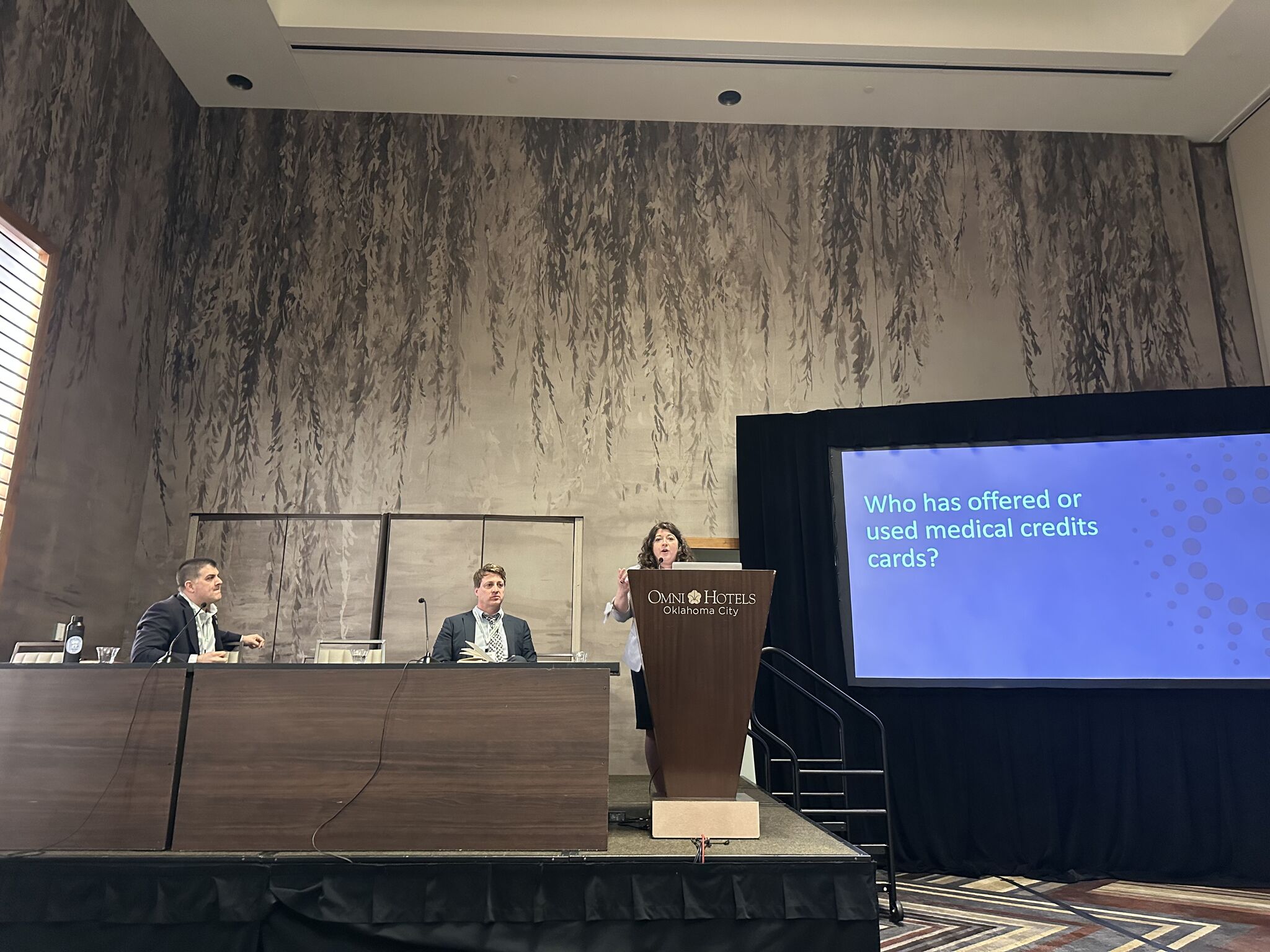
Once involved, our contributions were concrete and specific:
- Shaping the legislative language. Our staff provided recommendations on the bill’s text.
- Testifying at the bill hearing. Staff testified directly, adding independent, research-backed weight to the case for the bill.
- Rebutting industry misinformation in real time. When industry representatives offered testimony that advocates believed was inaccurate, we drafted a memo to the co-chairs of the General Law Committee correcting the record before lawmakers voted.
- Serving as an unbiased, factual resource for lawmakers. The goal was to give legislators the kind of unbiased, factual grounding that lets them vote with confidence on a common-sense consumer protection.
None of this replaced the on-the-ground campaign work. It supplemented it, providing the research, drafting support, and rapid-response capacity that let Connecticut’s advocates and Rep. Turco focus on the political work of building votes.
The Outcome
The bill passed with overwhelming bipartisan support. Rep. Turco, vice chair of the General Law Committee, credited Community Catalyst’s support and expertise with helping educate his colleagues enough to secure an informed vote.
Connecticut now joins California, Illinois and New York as states with laws on the books addressing medical credit cards.
Why This Case Study Matters
Connecticut is a template for how Community Catalyst’s model works: build long-term relationships with state and community advocates and decision makers, stay engaged in the federal policy conversation so the organization has deep subject-matter expertise on tap, and be ready when a state is ready to move. With legislative drafting support, testimony, rapid-response policy research, and a reputation for being a straight shooter that lawmakers on both sides of the aisle are willing to trust.
It’s also a preview of what’s next. With federal action on medical debt largely stalled, states are where this fight is happening, and Connecticut’s law, along with the recommendations Community Catalyst has developed on both medical credit cards and healthcare affordability more broadly, gives advocates in other states a concrete playbook and a partner who has their back.